
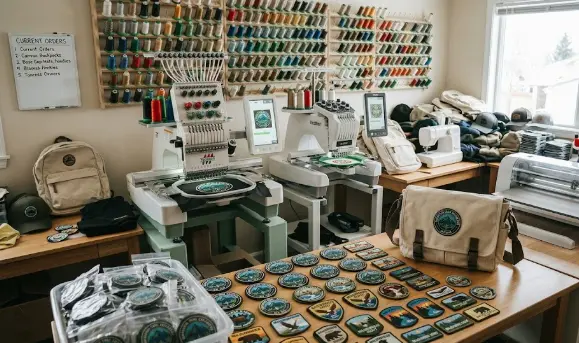
A strong patch catches the eye before a brand name does. A well-made patch signals care, pride, and a level of detail that shortcuts the trust gap. This is why custom embroidery patches has a long life in Canada. It shows up on uniforms, jackets, workwear, sports clubs, community groups, and fashion drops.
But any patches look rough, threads curl, and edges fray. That gap between a poor patch and a high-quality one is larger than most people expect.
You can close that gap with the right process. It starts before any thread touches a needle. It comes down to design choices, fabric choices, thread choices, and production steps. This guide walks you through each part with a clear path from idea to patch.
Step By Step Guide To Create A High-Quality Patch
Here is a simple process that many professional patch makers in Canada follow. You can adapt it to your workflow.
Step 1. Define the purpose
Set the reason for the patch. A brand launch, team event or creating for employee uniform. This purpose guides the shape, size, tone, and color.
Step 2. Sketch a clear concept
Create a rough sketch with bold forms. Keep the shapes simple. Test different variations.
Step 3. Prepare a digital version
Use a vector file. Most producers accept AI, EPS, SVG, or high-resolution PDF. A vector file helps the digitizer create clean lines.
Step 4. Choose colors from thread charts
Pick your final thread colors based on actual thread swatches. This helps you avoid mismatches.
Step 5. Set the size
Small patches must drop fine details. Large patches can support line work. Measure the area where the patch will sit. Size decisions affect stitch count and cost.
Step 6. Pick the backing
You have options, Iron-on, sew-on, hook and loop, adhesive, or magnetic. Each option works for different surfaces. Sew-on backings last longer. Iron-on works for smooth fabrics. Hook and loop suits tactical gear.
Step 7. Pick the border style
Merrow borders create a rounded stitched edge. They work on regular shapes. Hot-cut borders create a sharp edge for irregular shapes.
Step 8. Send to Patch Makers Canada
Send your file and all the information to the Patch Makers Canada
Step 9. Check the sample
Review the sample. Check clarity, line thickness, color accuracy, and texture. If anything feels off, revise before bulk production.
Step 10. Produce and inspect
High-quality producers inspect each patch for loose threads, uneven edges, and color shifts. This step protects your final batch from defects.
Tips For Making A Great Patch Every Time
The best results come from small habits. These habits create sharp, professional patches without extra cost.
- Focus on contrast: Low contrast makes patches look muddy. Use clear light-dark balance. Borders add structure. They keep shapes clean.
- Avoid tiny details: Thread cannot handle micro elements. Remove small icons. Increase stroke weights. Simplify text.
- Use strong typography: Bold fonts stitch cleanly. Thin fonts break. Block fonts and sans-serif fonts offer sharp results. Test legibility at final size.
- Match the patch to the garment: A patch may look great in hand but awkward on a garment. Match scale to surface. A small logo on a large jacket looks lost. A large patch on a hat feels heavy.
- Follow thread direction: Stitch direction changes texture. The digitizer will pick angles that suit the design. Trust the logic behind these choices.
- Review colors in natural light: Thread looks different under studio lighting. Review samples in natural light for accuracy.
- Store patches flat: Heat and moisture warp patches. Store them flat in a dry area. This helps during application.
FAQs
How long do patches last?
A high-quality custom embroidered patch can last several years. Durability depends on thread quality, backing type, and garment care. Sew-on patches have the longest life.
Can patches go on any fabric?
Most fabrics work. Cotton, denim, canvas, polyester, and blends hold patches well. Stretch fabrics may need extra support.
How long does production take?
Most Canadian producers deliver in one to three weeks. Lead time depends on design, quantity, and season.
Summary
A high-quality patch starts with clarity. A clear purpose, a clean design, and bold shapes create a strong base. Thread color, size, shape, and backing type shape the final feel. The digitizing stage brings the design to life. Sampling protects your investment. Solid production habits produce durable patches with consistent texture.
Your patch can be a badge, a story, or a symbol. When built with care, it becomes something people want to wear.