
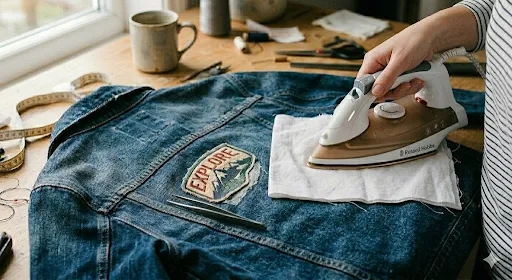
Iron-on patch on your gear once looked perfect. But now it feels off or maybe your style changed. So you decide to take it off. But the iron-on patch has strong adhesive pressed deep into the fabric. That bond does not break easily if you don’t know how to remove iron-on patches without damaging fabric.
If you pull it out randomly, it can rip the top layer of cloth. Sometimes it leaves behind thick, sticky glue. Both situations hurt your jacket, shirt, or bag. The fabric may stretch, tear, or look patchy.
The good news? You are not going to deal with that. In this guide, you will learn step by step how to remove iron-on patches safely. No tearing. No fabric damage. Just simple methods that work.
What to Check First Before You Start
Before you grab an iron, pause for a minute.
- Check the fabric: Cotton and denim handle heat well. Polyester and blends can melt if the iron is too hot. Delicate fabrics like silk need extra care.
- See how the patch was attached: Is it ironed only? Or stitched and ironed? If there are stitches, remove them first with a seam ripper.
- Look at the patch age: Older patches usually stick harder because the glue has settled deep into the fabric.
- Test a hidden area: Always test heat on a small inside corner. Better safe than sorry.
Method 1: Remove Iron-On Patches Using Heat (Most Effective Method)
Heat softens the glue. Soft glue lets go.
What You Need:
- Iron
- Thin cloth or parchment paper
- Tweezers or a butter knife
Steps:
- Heat your iron to medium-high (no steam).
- Place a thin cloth over the patch.
- Press the iron on top for 15–30 seconds.
- Lift the cloth and gently peel from one corner.
- If it resists, apply heat again.
Best for: Denim jackets, cotton hoodies, canvas bags.
Avoid: Holding heat too long in one spot. That can scorch fabric.
Method 2: Using a Hair Dryer
No iron nearby? A hair dryer can work.
Steps:
- Turn the dryer to high heat.
- Blow hot air directly onto the patch for 1–2 minutes.
- Try lifting a corner with tweezers.
- Keep heating and peeling slowly.
This method is gentler but slower. It works well for thinner patches.
Method 3: Using Adhesive Remover (For Stubborn Glue)
Sometimes the patch comes off, but the sticky glue stays behind.
You can use:
- Rubbing alcohol
- Fabric-safe adhesive remover
- White vinegar
Steps:
- Apply a small amount to a cotton cloth.
- Dab the glue area gently.
- Let it sit for a few minutes.
- Rub softly until glue lifts.
- Wash the garment afterward.
How to Replace or Upgrade Your Patch
Once the old patch is gone, your garment gets a second life.
You can add:
- A cleaner design
- A better size
- A stronger backing
- A custom look that fits your current style
If you’re ready to refresh your jacket, hoodie, or uniform, Patch Makers Canada can create high-quality custom iron-on patches that stick properly and look sharp.
FAQs
Can iron-on patches be removed permanently?
Yes, iron-on patches can usually be removed permanently using controlled heat to soften the adhesive. However, depending on how long the patch was attached and the fabric type, you may still notice slight texture changes, faint outlines, or minor discoloration where the patch once sat.
Will removing a patch leave a mark?
It can leave a mark, especially if the surrounding fabric has faded from washing or sunlight exposure over time. The area under the patch often looks newer and brighter, creating a visible contrast after removal, even if no glue residue remains.
Can I reuse an iron-on patch?
In most cases, you cannot reuse an iron-on patch because the adhesive backing weakens or separates during removal. Even if it looks intact, the glue layer usually loses its bonding strength and will not stick properly again without additional adhesive.
How long does removal take?
Removal time depends on the adhesive strength, fabric type, and patch size. On average, it takes between 15 to 30 minutes if you work slowly, reapply heat carefully, and remove leftover glue properly without rushing the process.
Does washing help loosen adhesive?
Washing alone does not effectively loosen iron-on adhesive because heat activates the glue, not water. In fact, repeated washing and drying can sometimes strengthen the bond, making proper heat-based removal methods much more reliable and effective.
Conclusion
Removing an iron-on patch is not about force. It is about control. When you use the right heat, move slowly, and respect the fabric, the adhesive softens and releases without tearing the material underneath.
Rushing is what causes damage. Pulling too hard can stretch fibers. Too much heat can scorch fabric. But steady pressure, careful peeling, and proper glue removal keep your jacket, shirt, or bag looking clean.
When you are ready to replace the old patch with something sharper, cleaner, and stronger, Patch Makers Canada can help you create custom iron-on patches designed to hold firmly and look professional.