
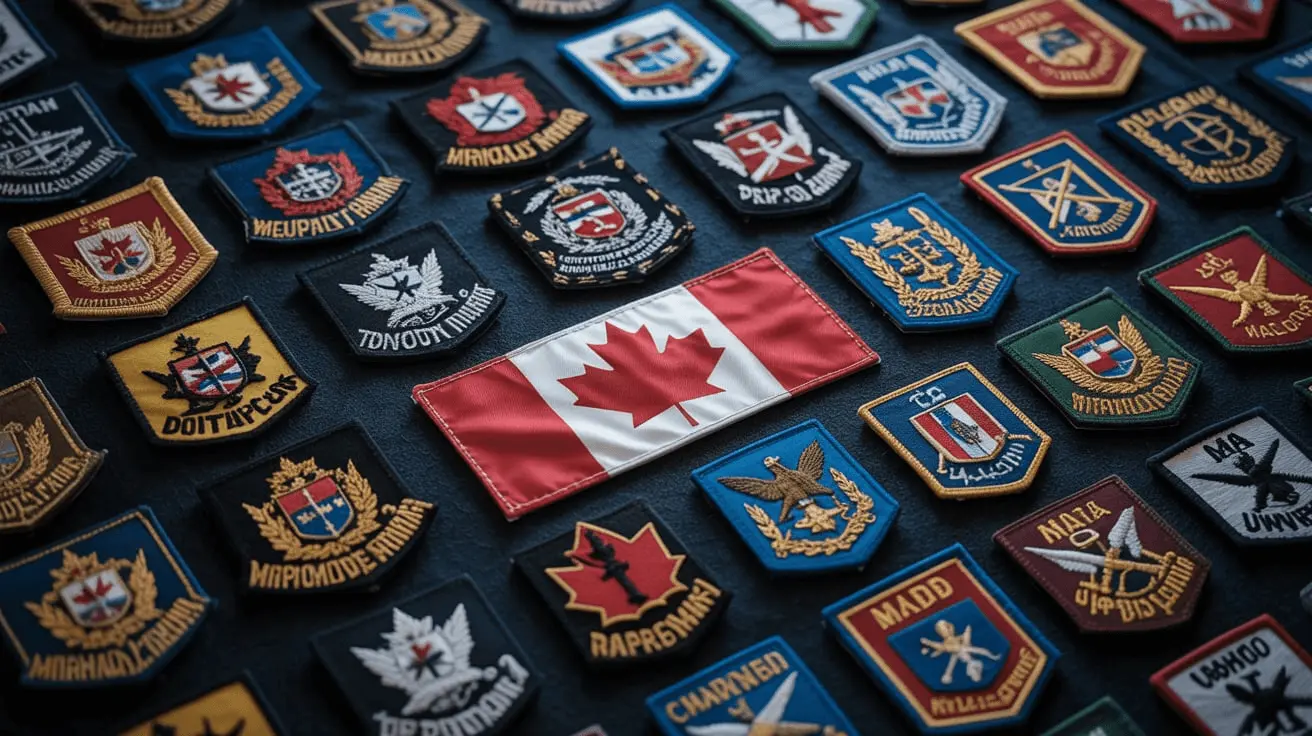
Everyone wants a slice of pride from the Canadian Army, but wearing official badges is not possible for many people. This is why custom military patches in Canada have been gaining popularity as an alternative way of showing their appreciation, pride, and respect without implying any rank or experience in the service.
Military patches are perfect for anyone who wants to pay tribute to the soldiers. Canadian military patches come in various designs, each telling a unique story. Some patches indicate a soldier’s rank within his unit and therefore represent his level of authority, while others represent the sovereignty of Canada in relation to protecting its citizens from external threats.
Also, there are patches that are designed solely based on the symbolic meaning of something, like sacrifice and courage, among others. Once you learn how to interpret them, you get a complete Canadian badge language guide.
This post dissects the various types of military patches available in Canada as well as their significance. Ranging from the popular Canadian national symbol, the Maple Leaf, which embodies national pride, to patches created for individual purposes, like remembering certain units or missions, there is a wide range of patch designs that reflect different aspects of the life of Canadian soldiers.
In addition, some patches may be specifically created to mark certain milestones and historical dates that reflect the contribution of Canadian forces in wars like World War I or World War II. In other cases, a patch may be created to represent certain regiments with unique and proud histories, giving members an opportunity to relate to that tradition.
Additionally, patches may even serve other purposes like fundraising and creating awareness about certain issues. Many groups create patches in order to raise money for active military members or veterans, promoting community involvement while simultaneously spreading awareness about the importance of such contributions.
While shopping for your custom military patches in Canada, you may be surprised to discover how much meaning is packed into these small items. They are not just decorations but badges of honor that symbolize respect and gratitude toward the sacrifices of the Canadian Armed Forces soldiers.
You can wear a patch on your jacket or backpack or display it in a collection. These patches reflect our values of service, dedication, and unity. In this article, we will discuss the various types of patches along with their meanings and uses. We will help you understand why military patches are popular among collectors and why some people choose to wear them proudly.
Let us learn more about the patches’ design elements, colors, and symbols to appreciate them fully. We invite you to learn more about custom military patches in Canada, which offer an opportunity for everyone, regardless of their background, to celebrate the courage of the military members.
Why Military Patches Hold Power
First of all, patches were used as simple units’ identifiers to distinguish one group from another. Gradually, they turned into complex emblems that stand for the soldier’s service history, including the ranks, the types of operations, the place, and the group where he was deployed.
These patches help soldiers recognize each other in the middle of battle or between operations in order to foster communication and comradeship in any situation. Patches provide important psychological support to military personnel, especially in the course of operations in which the stress of war may affect morale negatively.
Each patch symbolises much more than just an identifier. You will understand that there is always unit pride in it since it represents the shared history, efforts, and sacrifices of people who wear patches on their uniforms.
With such a patch, you can tell about whom you were trained, about whom you fought, and what achievements you managed to make as a team in conditions that could break anyone.
Moreover, for veterans, patches become some sort of link to the glorious past, reminding them about their courage and unity. Finally, patches set the example for young soldiers.
People who do not serve in the army cannot comprehend the strength of this bond completely. For a veteran, the fact that he no longer works as a soldier does not mean that he forgets the meaning behind the patches on his uniform.
In fact, for a person who once served his motherland, his patch acquires an even greater value since it becomes a memory associated with his most memorable experiences.
Therefore, it can be expected that patches will be framed and proudly kept in the houses of former soldiers, shared with fellow soldiers, and respected in every possible way.
In other words, patches worn by army people tell a lot about the values of the person who wore them and the army as a community as a whole. A patch represents one of the ways for each military member to earn respect from both his fellows and civilians.
Moreover, patches can be seen as storytellers since they tell people about the experiences of their wearers. Thus, everyone should try to understand the value of patches in order to get some insights into the lives of those who had once served their country.
What Different Patches Represent
There are several broad types of military patches custom to Canada. They each have their unique meanings as well as the spots where they should be worn on uniforms. Learning about these will enable you to interpret the uniform instantly.
Branch and service identifiers
These patches announce which part of the military a service member comes from. Army, Air Force, Navy. They set the baseline. If the patch says “Canada” with a flag, that’s national identity first. Everything else stacks on top.
Unit and formation patches
This is where identity tightens. Regiments and divisions have distinct designs that reflect their name, history, mission type, or region. In Canada, unit insignia ties back to deep military heritage. Many regiments trace lineage to the First and Second World Wars. You don’t wear a unit patch without also wearing its history.
Rank patches
Rank determines authority. These symbols sit in prominent places like the collar or chest, depending on uniform type. Rank insignia are clean, structured, and universal within the Canadian Armed Forces.
Name patches
One of the simplest yet most vital patches. Every soldier is accountable for every action. The custom name patches keep that principle visible. You wear your own name, and that matters.
Duty and specialty tabs
Some patches reveal a service member’s role or qualifications. Examples include medic, airborne, sniper, or engineer identifiers. These are earned through training or selection. Their presence carries credibility.
Morale patches
Morale patches sit outside formal policy. They are humorous, symbolic, and sometimes irreverent. They boost team spirit. They reflect inner culture and personality. Canadian soldiers trade and collect morale patches, just like their allies in the U.S. and the UK. You will not see them in official parades, but you will see them on deployment bags, jackets, and inside bases. Find unique ideas to make your morale patches special.
Commemorative and operational patches
These memorialize missions. They might include dates, flags, task force names, or campaign titles. If you served in a particular operation, you might wear or keep the mission patch long after service ends. These become personal artifacts later.
How Soldiers and Veterans Display Their Patches
Once the service concludes, patches become a part of an individual’s collection of memorabilia, a physical embodiment of not only what they experienced but also the friendships that were formed through their service.
Military patches may even be considered battle trophies by veterans, but unlike war spoils, they carry a sense of subdued pride. Every patch has its own story to tell, one that is part of a larger story that will continue to be shared throughout their lifetime.
There are four common approaches used to display patches. These methods depend on how each veteran wants to preserve his memories, depending on his personality and his own relationship with the patches.
The first popular way patches are displayed is using shadow boxes. Shadow boxes allow for patches and other memorabilia to be placed side-by-side. It is the most aesthetically pleasing option because patches do not have to be sewn into a jacket or shirt.
Second, some of the veterans have chosen to sew the patches onto their jackets or vests, thereby making themselves into living books depicting their lives as members of the armed forces.
Apart from giving these veterans a chance to express themselves, it also encourages discussions about the lives of other veterans and even civilians since stories can be told via this informal means of communication.
A third option would be the use of a dedicated mount or frame to place patches. By presenting patches in such a manner, one could treat them more seriously and elevate them to something worthy of admiration.
Indeed, patches displayed in such a way could become the center of attention in any room, giving people an opportunity to inquire about their meaning and the stories behind them.
A fourth way is the patches may be placed in digital archives that could be accessible to the veteran’s relatives, friends, and followers on social media, thus providing another platform for the veteran to express himself or herself.
At the same time, the stories accompanying the patches in such collections allow other people to learn about the hardships experienced by people who serve our country. These bring a sense of patriotism in the viewers.
In each of these cases, the common thread that ties them together is always the same: these patches are more than just insignia that represent rank and affiliation. They are special badges of individual experience and solidarity created in times of service.
Collectors often look for original patches from historic units. These pieces gain value because authentic military items are harder to reproduce accurately. That scarcity raises the stakes for preservation.
Frequently Asked Questions
[faq_accordion]
Get Ready to Start Patching!
Custom military patches in Canada are not much in size. However, the significance that lies behind them is similar to that of medals. Patches serve as an identity in situations where everything that a person does is geared towards survival and endurance.
They keep the individual grounded while he or she is being deployed somewhere, and at the same time, they stay with the individual when he or she returns from deployment. Such seemingly plain things become an incredible symbolization of the journey taken by a person and his or her battles. Both physical and inner ones.
So, yes, they are fabric, which does not mean that there is nothing else about them but the material that they are made of. On the contrary, patches are also memories stored in time.
They symbolise camaraderie, sacrifice, and personal growth. Every single stitch on a patch has a story to tell, every color tells something special, and every emblem stands for something personal to an individual. Just in case, treat your patches with honor because they deserve it.
And if you are working on a patch of your own, be it an actual patch to add on to a uniform or a more figurative patch that represents some sort of project or personal endeavor, think of it as a story that you need to write for people who may end up depending on it someday.
They surely will, for there will always be someone out there who will find inspiration in it, who will see themselves reflected in it, and who will feel less alone thanks to the patch you’ve created.
Just as morale patches are a source of comfort and pride for the soldiers, they can become a beacon for everyone going through hardships and searching for understanding.
Think about what symbols and colors you would want to use in it, as both can help tell the story you want to. From there, we, the team of experts at Patch Makers Canada, will take over and manufacture the patch of your choice. Contact us for a free quote today!